Friday was beautiful, so Katarina and I decided to go to
work with Thomas for the afternoon, and enjoy the fresh air. At our second job, Thomas was raising the limbs on a tree to have a 10 foot clearance. He didn't realize there was a nest on a particularly high limb until the it fell to the ground, and the squeaky-cheeps of baby squirrels filled the air. Four newborn gray squirrels.
The house we were working at was in a busy neighborhood, and with the yard work going on and the homeowner's pets wandering around, we couldn't leave the squirrels on the ground safely, so we gathered them up in a hat Thomas had in the truck.
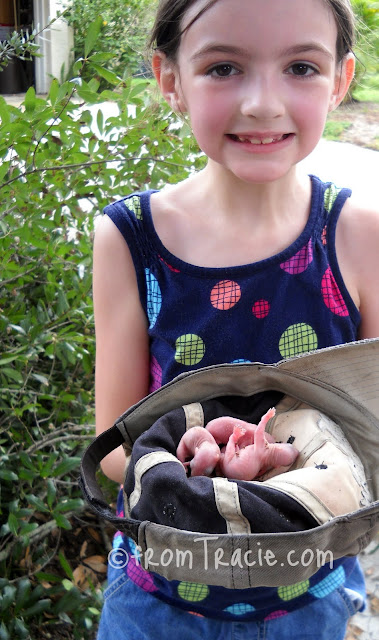
The homeowner took one look at our hat full of squirrels, and with a panicked look in her eyes, said, "You are going to take those squirrels with you, right?! You can not leave them here."
We took the squirrels to a nearby pet store to get a small box, and some material to keep them warm.
Caring for squirrels isn't new for us. A few years ago, Thomas brought home two orphaned baby squirrels. There was no wildlife rehabilitation agency, veterinarian, or pet store in the town we used to live, that was willing to care for squirrels. With no one to take them in, we named them Poncho and Lefty, and raised them until they were old enough to be released (just call me Bob Ross).
With fond memories of Poncho and Lefty running through our minds, Thomas and I were tempted to raise these new babies ourselves. But where we currently live, we don't have the right kind of space for squirrels, and we aren't allowed to have pets. Raising them ourselves was not a realistic option.

One of the pet store employees gave us a phone number for someone who works with wild animals. Leslie Johnson is a board member and volunteer with the
Wildlife Rehabilitation Center of Central Florida, and she takes in orphaned squirrels.
A quick phone call later, we were on our way to Leslie's house.
Katarina had already started to bond with the baby squirrels and was not excited to give them up. There was some tears. After talking about it, she understood that we couldn't give them the care they needed, and keeping them wouldn't be responsible or kind.
When we arrived at Leslie's house, Katarina was happy to see that she already had a slightly older baby squirrel there who could be friends with our little ones. We will also be checking in on the squirrels as they grow (until it is time for them to be released into the wild), and that helped her feel better about leaving them.
What should you do if you find baby squirrels?
-Place the squirrels in a safe spot, near their tree. Quietly watch from a distance, to make sure that the babies are safe, until the mama squirrel comes back.
-It doesn't matter if you touched the babies, the mama will take them back.
-Gray squirrels usually have a second nest already built, so they can quickly relocate the babies once they return.
-If the mom does not return, the most important thing you need to do -
keep the babies warm and hydrated - until you can turn them over to a
wildlife rehabilitator in your area.
*The
Wildlife Rehabilitation Center of Central Florida is a non-profit organization, which receives no state or federal funding. They rely on
donations from private citizens and businesses to fund the care of injured and orphaned animals, rehabilitate them, and return them to the wild. Several volunteers, like Leslie, care for animals in their homes, and the center cares for an average of 2,000 animals a year. We are very thankful that they were willing to take in and raise our four baby squirrels.
What is the most unusual pet or animal you have cared for?


